Driving in the Netherlands: What We Learned (So You Don't Have To)
Renting, insuring, buying, and parking a car in the Netherlands as an American, plus the 185-day license clock and what the Dutch driving test is really like.
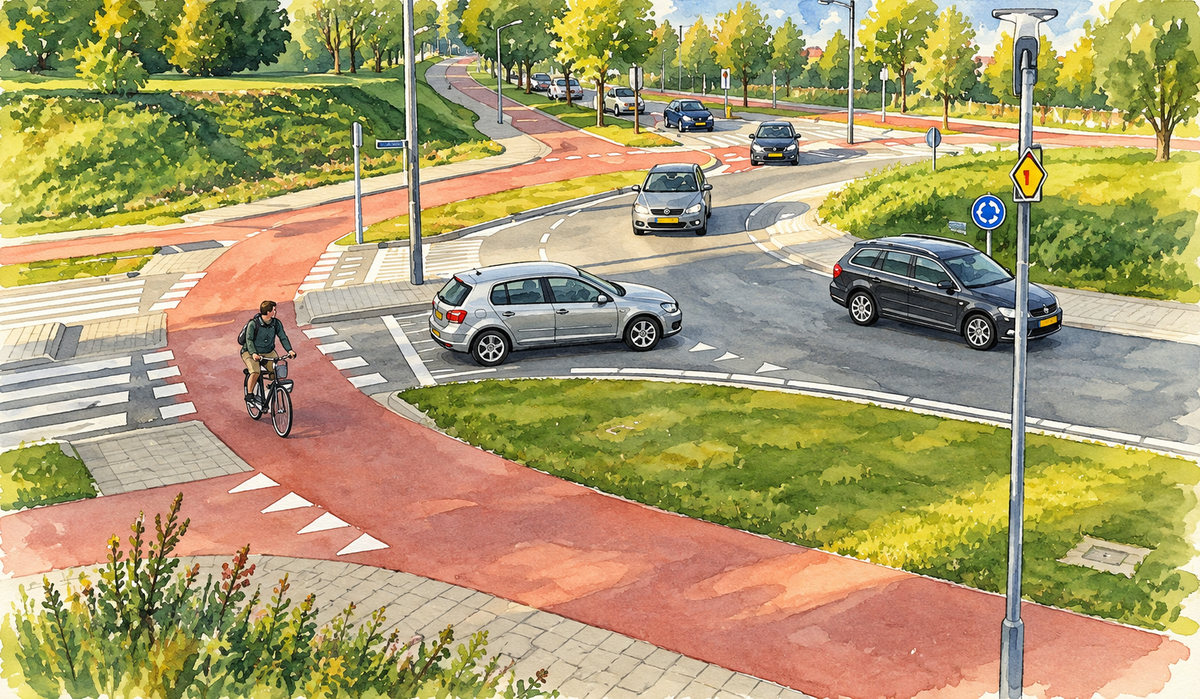
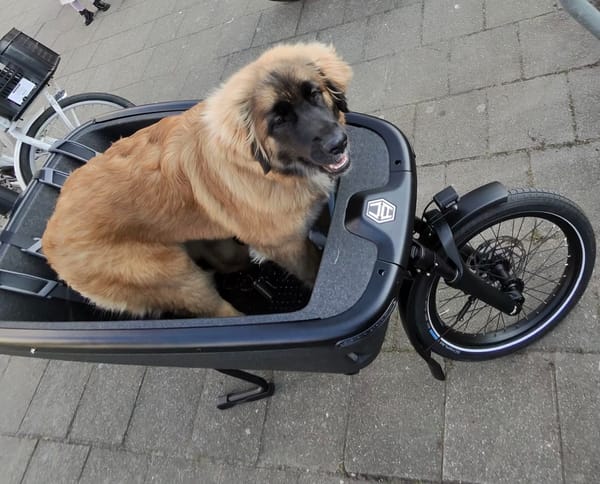
As I wrote in our cycling post, the bakfiets has become our family's daily driver. You really can get around the Netherlands by bike, tram, bus and train, and plenty of households here never own a car at all.
But every now and then you need to move gear, get the dog to the vet, haul something from IKEA that won't fit in a box bike, or take a weekend trip somewhere the trains don't go. So here's everything we learned about driving here, from renting, to insurance, to buying a car, to the (much more involved than I expected) Dutch driver's license.
Renting a Car
Good news first: renting is inexpensive. The best prices I found were with Sixt, booked through Kayak. If you need a car for a while, rent it for more than a week; the weekly and monthly rates are dramatically cheaper per day than renting a few days at a time.
Parking
Parking is the part of driving here that will surprise you most. Cities are built for people and bikes, not cars, so spaces are scarce and paid parking is the norm. Before you drive anywhere, check with your destination about where (or whether) you can park. For trips into central Amsterdam, a P+R lot on the edge of the city plus a tram ride is often the easiest option.
A few things we learned:
- Get a parking app. EasyPark was a boon for us. Most places have meters that are hard to find (and when you find them, they may not take your card), but you can just open the app, confirm your zone and pay, and stop it when you leave.
- Blue zones exist. Some areas use a blue parking zone where parking is free for a limited time but you need to display a parking disc (parkeerschijf) showing your arrival time. You can buy one at most gas stations or supermarkets.
- Resident permits aren't automatic. If you are moving into a city center and planning to have a car, look up the resident permit situation for your neighborhood before you sign a lease. In busy cities like Amsterdam there are waitlists, sometimes long ones.
Your US License and the 185-Day Clock
You can drive on your US license when you first arrive, but the clock starts when you register with your gemeente (municipality). After 185 days your US license is no longer valid for driving here, and trust me, 185 days goes by faster than you think, especially when you're busy setting up everything else.
US states don't have license exchange agreements with the Netherlands, so for most Americans the only way to get a Dutch license is to take the Dutch theory and practical exams (more on that below). The one big exception is the 30% ruling.
The 30% Ruling Shortcut
If you have the 30% ruling, you can exchange your US license for a Dutch one without taking any exams. Your partner or family members can often exchange under your ruling too. You need to do the exchange while the ruling is active, and your US license must still be valid at the time.
The catch for those of us coming over on DAFT: the 30% ruling is for employees recruited from abroad, so a sole proprietor (eenmanszaak) doesn't qualify. To get it you need to set up a BV and hire yourself into your own company as a director-shareholder (DGA), and you should plan this before you move. That means extra paperwork, payroll, and accounting costs, and in 2026 your BV has to pay you a salary of at least €58,000 (the DGA customary wage), while the 30% ruling itself requires a taxable salary of at least €48,013 after the 30% (roughly €69k gross). The ruling also drops to 27% in 2027. In my opinion it's only a good deal if you're confident your business will bring in well above that. If it does, the free license exchange is a very nice bonus on top of the tax savings.
This is a big decision, so talk with an accountant who works with DAFT entrepreneurs before you commit.
Renew Your US License Before You Go
Check the expiration date on your US license before you move. If it's anywhere close, renew it while you're still in the US. Renewing from overseas is much harder, and some states make it impossible without showing up in person. An expired license can't be exchanged (even under the 30% ruling), and you'll want a valid license for renting cars on trips back home.
Insurance
Car insurance here is expensive for new arrivals, because Dutch insurers price your premium off your claim-free years (schadevrije jaren), and your 30 years of US driving history doesn't show up in their system. You start at zero, just like a brand-new 18-year-old driver.
We bought an almost 10-year-old Tesla Model X, and the quotes we got were €150+/month for liability only (WA, the legal minimum). Nuts. For comparison, drivers with an established Dutch history pay a fraction of that.
As a military veteran I'm a USAA member, and it turns out USAA will now insure cars in the Netherlands, even for honorably discharged veterans who aren't stationed here. It came in at about a third of the price. If you or your spouse served, check USAA's Netherlands page before you shop anywhere else.
Buying a Car
Buying a car is similar to the US in some ways and different in others. The biggest difference is that there's no separate title and registration; it's all one thing, handled by the RDW (the Dutch vehicle authority).
When you buy a car, you get a code when the purchase goes through, and a second code comes with the registration card (kentekencard) that gets mailed to you. Keep both of them safe. If you ever want to sell the car, the RDW transfer requires both codes.
Also, you need insurance in place before the transfer. The ownership transfer won't go through without it, so line up your policy before you go to pick up the car.
Cost of Ownership: US vs the Netherlands
So what does it actually cost to keep a car on the road here compared to back home? Here's a side-by-side for a typical compact car (think VW Golf or Toyota Corolla) for a driver with a long, clean record. US figures are AAA's 2025 national averages for small and medium sedans; Dutch figures are 2026 prices for a petrol VW Golf registered in Noord-Holland, converted at about $1.15 per euro.
| Per year | 🇺🇸 United States | 🇳🇱 Netherlands |
|---|---|---|
| Registration / road tax | ~$520–$610 (license, registration & taxes) | ~$1,260 (€1,097 road tax, billed quarterly or monthly) |
| Inspection | Varies by state; many have none | ~$35–$75 (€30–€65) per APK, first at 4 years, then every 2, yearly after 8 |
| Insurance, full coverage (experienced driver) | ~$1,510–$1,570 | ~$1,175–$2,000 (all-risk, €85–€145/month) if your claim-free years count |
| Insurance, liability only (experienced driver) | Varies by state | ~$550–$830 (WA, €40–€60/month) |
| Insurance as a new arrival (0 claim-free years) | n/a | Our liability-only quote: $2,070+ (€150+/month) 😬 |
| Gas price | ~$3.15/gallon | ~$9.80/gallon (Euro95 around €2.25/liter) |
| Fuel for 12,000 miles at 30 mpg | ~$1,260 | ~$3,920 |
| Rough total, same 12,000 miles | ~$3,400 | ~$6,800 |
| Rough total, driving half as much | ~$2,750 | ~$4,800 |
Totals leave out depreciation, maintenance, and parking, and assume full-coverage insurance at the middle of the range.
So car-for-car, owning one here costs more, mostly because of fuel and road tax. The difference is that you drive a lot less. Distances are short, the trains are good, and the bike handles most daily trips, so a lot of Dutch families get by with one car (or none) where they would have had two in the US. For us, one car and a bakfiets costs less than the two cars we had in California.
A few things to know about Dutch road tax (motorrijtuigenbelasting, or MRB):
- It's based on weight. The heavier the car, the more you pay, and you pay it for as long as the car is in your name, whether you drive it or not.
- It depends on your province. Each province adds its own surcharge. Noord-Holland is one of the cheapest, Zuid-Holland one of the most expensive.
- EVs get a discount, but it's shrinking. EVs were exempt through 2024 and paid only 25% in 2025. For 2026 through 2028 they pay 70% of the normal rate, 75% in 2029, and the full rate from 2030.
- EVs lost their weight break. Until 2025, EVs got a weight correction for the heavy battery. That's gone as of 2026, so a heavy EV can pay more than a lighter petrol car even with the discount. A Tesla Model Y (~1,900 kg) comes out around €1,300/year in Noord-Holland vs ~€1,100 for the Golf. Our Model X is heavier still. EVs make up for some of it on "fuel," especially if you can charge at home.
- Diesel costs extra, and older diesels are banned from the environmental zones inside Amsterdam's A10 ring and a few other cities (see below).
You can calculate the exact road tax for any car using the Belastingdienst calculator. Do this before you buy!
Rules of the Road That Surprised Me
- Priority from the right. At intersections without signs or markings, traffic coming from the right has priority, including bikes. It feels very wrong at first after 30 years of four-way stops.
- Shark's teeth. A row of white triangles painted across your lane (pointing at you) means you yield. Learn to spot these fast.
- Bikes and trams. When you turn right, you cross a bike lane, and cyclists going straight have priority. Always check your mirror and over your shoulder. Trams generally have priority too, and they are not going to stop for you.
- Highway speeds. On most motorways the limit is 100 km/h during the day (6:00–19:00), even if a higher limit applies at night. Watch the signs.
- Fines find you. There are lots of speed cameras, including average-speed sections on highways that measure your speed between two points. Tickets are mailed to the registered owner of the car, often weeks later, and even a few km/h over earns a fine. If you're in a rental, the rental company will pass it along (with a fee).
- Environmental zones. Amsterdam, Utrecht, Den Haag and Arnhem have environmental zones (milieuzones) that restrict older diesel cars. Cameras enforce them automatically. Petrol and electric cars are fine.
Getting a Dutch Driver's License
If you don't have the 30% ruling, getting a Dutch license is a bit of a PITA. Again, you're treated as if you have no driving experience at all. Here's how it works:
Step 1: Sign Up With a Driving School
You can book the theory exam yourself on Mijn CBR (you'll need your DigiD), but you'll need a driving school for the practical exam anyway. I booked both through mine. Many schools give you access to a study app as part of their lesson packages; mine included an app that was really helpful for studying.
Step 2: File Your Health Declaration Right Away
Before you can take the practical exam, you need to submit a health declaration (gezondheidsverklaring) to the CBR, which costs €46.90. It's a questionnaire about your medical history, and it's the step I'd most recommend starting on day one.
Answer it honestly. But know that answering "yes" to any of the questions sends your file for extra review, which can add a month or more. One of the questions asks whether you've ever been diagnosed with a psychological disorder. I had been diagnosed with ADHD, so I said so, and that alone meant waiting an extra month before I got the green light. It seems like the kind of thing that should be protected against, but there you have it.
Step 3: Study for (and Pass) the Theory Exam
The theory exam is run by the CBR and costs €50.50 in 2026. You pay whether or not you pass, but you can retake it. Depending on which city you book in, expect a wait of a few weeks to a month for a slot.
Don't underestimate it. It has a lot of gotcha questions and requires some serious flashcard practice. While studying I ran into questions like: how many centimeters can a secured load stick out from the side of a vehicle? Or, what's the math for how far behind another car you need to be when traveling 50 km/h? (I'll leave the answers to your study app.)
Step 4: The Practical (Driving) Exam
The practical exam is scheduled through your driving school and costs €143.50 at the CBR, plus you'll usually pay your school for the car and instructor on exam day.
The driving schools know how the exam works and are generally reluctant to let you test without some lessons. You may be able to get them to agree to only a few lessons before they let you take it, but the one I tried pushed pretty hard for a 10-lesson (20 hours of driving) package, which felt like more than I needed after driving for 30 years. Lessons generally run about €45–€75 per hour in 2026, with big cities like Amsterdam at the higher end, so a 20-hour package can easily run over €1,000 on top of the exam fees. Shop around, and push for fewer lessons if you're an experienced driver.
Final Thoughts
Driving in the Netherlands isn't hard once you know the rules, but the paperwork around it (insurance, licensing, road tax) catches a lot of Americans by surprise. If I could go back and give myself three pieces of advice they would be:
- Renew your US license before you leave.
- File your health declaration and start on the theory exam as soon as you register with your gemeente. The 185 days disappear fast.
- Shop insurance hard, and if you served, call USAA first.
And honestly? Rent before you buy. Between bikes, trains and the occasional weekly rental, you might find (like over half of Amsterdam households) that you don't need a car at all.